Why Rapid, Cheap Iteration Is the Secret Sauce for Indie App Success
Learn how rapid prototyping and cheap experimentation can help indie developers test wild ideas, fail fast, and discover what users actually want before burning through resources.
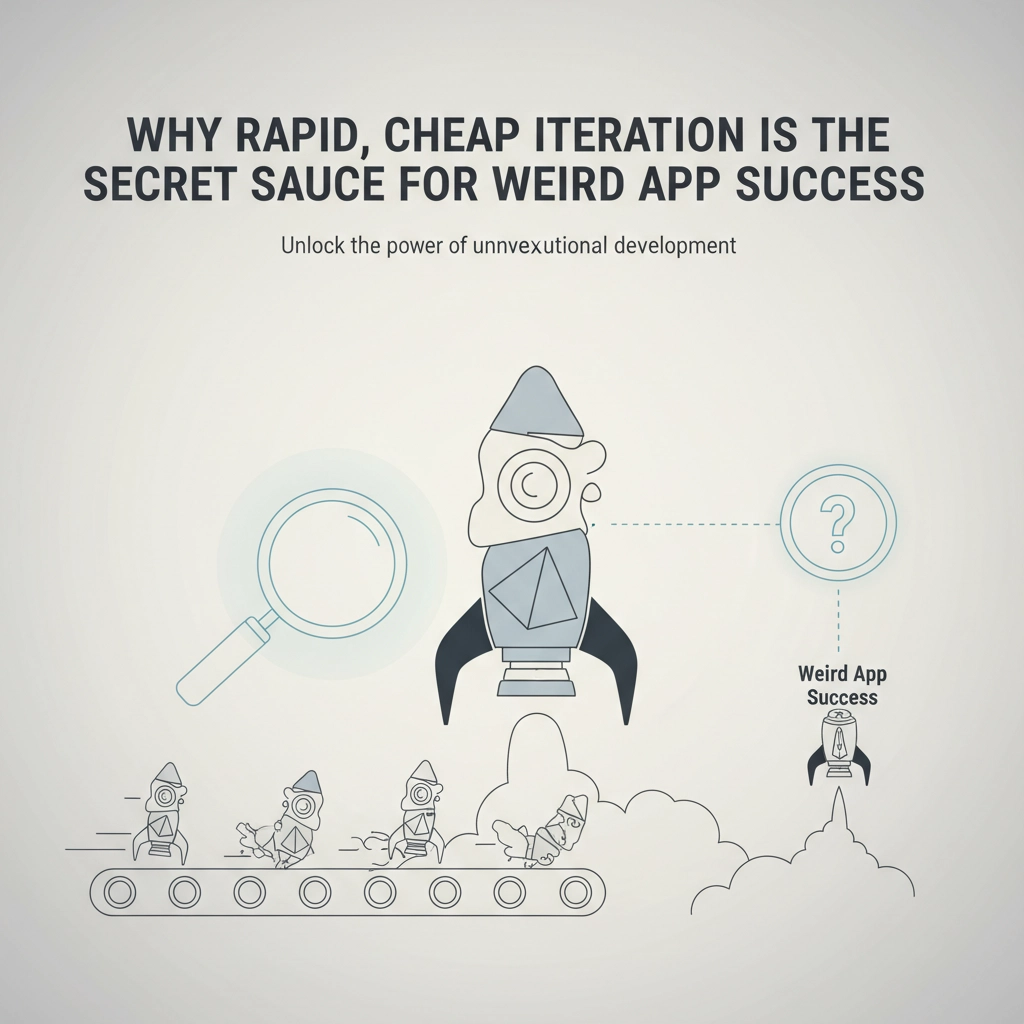
I Love Bad Ideas (& Why You Should, Too)
Let's just lay it out there: I love starting with messy, vague, "probably stupid" ideas. That's not because I have a penchant for doomed projects, but because some of my best work has come from chasing those unique sparks before the "logic police" in my head shut them down. This is especially true if you hang your hat (like we do at Odditory) on experimentation. The secret? Rapid, cheap iteration. Start ugly, learn fast, and see what sticks before you write a novel's worth of code, or a check your bank account can't cash.
But most devs spend forever perfecting a prototype in their heads, or worse, polishing the pixels on a minimum viable product nobody wanted. If you're building anything indie, experimental, or generally off the beaten tech path, let's be honest: success is about how quickly you can try, fail, and try again, without draining your soul (or your wallet).
The Playground Principle: Try Fast, Fail Cheap
Niche app ideas are like mysterious creatures, you have to let them roam before you figure out what species they are. Experimenting quickly and cheaply gives you this "playground" space.
Picture this: you dream up a music app that only plays backwards remixes of elevator jazz. Will anyone use it? Is that even fun or just a fever dream from bad sushi? If you burn six months building a production-ready backend before finding out, that failure is expensive, emotionally and financially.
But if you can test the idea with a one-week hacked-together prototype, suddenly uniqueness is welcome. You might hack it together with no UI, only a few dozen users, and a lot of duct tape (by which I mean Zapier and a Google Sheet). The key: you learn what's fun, awkward, or just baffling, before it's too late.
Prototyping Before Perfection
There's a time for elegant architecture, sure (I love a clean codebase). But when you're building indie, you need answers now, not once the last test passes CI. Prototype it, get your hands dirty, ship something "good enough" and let real humans play.
The 1-Week Hack: My Go-To Move
Here's one of my favorite non-secrets: I almost never spend more than a week on a first prototype. Why? Because everything sounds great until someone actually tries to use it.
Maybe your "Jazz Elevator" app is too niche (or, hey, stunningly addictive!). But either way, you haven't mortgaged your future to find out.
Feedback on Lightning Mode
Rapid iteration means you're chasing feedback, not perfection. I've seen teams (myself included) spend months in a bubble, only to emerge with an app that makes zero sense in the real world ("Turns out, people don't want a social network for left-handed ferret owners?").
If you can share links, demos, screenshots, or even just GIFs to five friends in a weekend, you get answers. And sometimes, the stuff you thought would flop gets all the love simply because you didn't waste time overthinking it.
For us at Odditory, this is practically a religion: test immediately, learn instantly, pivot mercilessly. Some ideas deserve to die, fast. Others? They blossom, but only if you let them struggle out into the light early.
The Magic of "Good Enough" Tools
Let's be real: nobody's handing out trophies for the fanciest architecture no one ever uses. I'm a sucker for fast, ugly stacks when pushing a quirky idea. If that means stringing together a low-code tool, a language model, and three browser tabs, so be it.
Cheap Tricks > Expensive Flops
Admit it, your most indie hack probably started with:
- Free tier cloud tools
- Cut-paste code from Stack Overflow
- A bunch of Zapier automations and little-to-no design
And that's awesome. This way, you can burn through five or six ridiculous concepts in the time (and cost) it takes to productionize a single "big idea." Odds are, one of those monorail-to-nowhere hacks uncovers something customers actually want.
Don't Get Bogged Down in "Best Practices" (Yet)
All respect to the clean coders out there, but chasing test coverage on V1 of your underwater font randomizer app is a waste of your energy. There's a reason hackathons favor speed over style, most of the code you write in week one will be dead and buried long before you hit launch.
Embrace the technical debt, for now. That means:
- Building with whatever's fastest, not prettiest
- Taping features together with glue logic and TODO comments
- Skipping refactors until you know it's worth fixing
If your app does catch fire (in a good way), you can pay down the debt later, because now you have proof it's worth investing in.
When You Actually Need to Level Up (and How to Tell)
Okay, so what if your indie app does land? Do you keep shipping spaghetti forever? Nope. At Odditory, we've helped a bunch of folks graduate a wobbly prototype into a lean, mean, production beast.
Look for these signals that it's time to scale up:
- Users are begging for features, not just reporting bugs
- Traffic spikes mean you can't sleep until you upgrade hosting
- Your demo code is so ugly, you're actually embarrassed (even in private)
That's when you invest in infrastructure, tests, design, and all the Good Developer Stuff™. But not before.

How Odditory Makes Indie Ideas Happen: Fast
Here comes the personal plug, but I say it with a big grin: at Odditory, our core vibe is "get it shipped," not "make it perfect." We build strangeness at record speed and cost so you can test wild concepts, make quick pivots, and land on your golden idea (or move on, budget intact).
From low-code/autocode stacks to generative AI hacks, to spinning up no-nonsense minimum demos, you get rapid cycles, honest feedback, and empathy for experimentation: not judgment for "ugly code." If you're itching to test something leftfield, let's chat: odditory.llc
TL;DR: Why Rapid, Cheap Iteration Wins Every Time
- Indie experiments need quick feedback loops: no long courtships, just swipe left or right, fast.
- Prototyping "junky" versions early means you'll really learn what works (instead of just hoping).
- Don't wait for pretty code or architecture: "good enough" is magnificent at the beginning.
- Once users validate your madness, then invest in the polish.
So go ahead: dream up, test fast, fail cheap, repeat. The best indie ideas only survive if you can afford to be wrong, early and often.
Happy experimenting! And if you want to ship something truly funky at warp speed… you know where to find us.